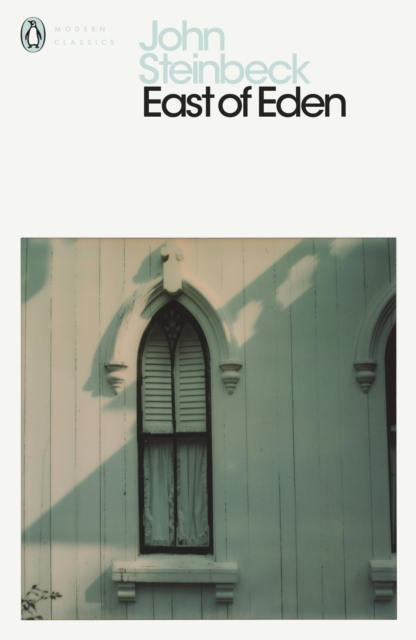
East Of Eden
3.990 kr.‘There is only one book to a man,’ Steinbeck wrote of East of Eden, his most ambitious novel. Set in the rich farmland of the Salinas Valley, California, this powerful, often brutal novel, follows the intertwined destinies of two families – the Trasks and the Hamiltons – whose generations hopelessly re-enact the fall of Adam and Eve and the poisonous rivalry of Cain and Abel. Here Steinbeck created some of his most memorable characters and explored his most enduring themes: the mystery of identity; the inexplicability of love, and the murderous consequences of love’s absence.

The Vegetarian
3.490 kr.A beautiful, unsettling novel in three acts, about rebellion and taboo, violence and eroticism, and the twisting metamorphosis of a soul. Winner of the 2016 Man Booker International PrizeHe is an office worker with moderate ambitions and mild manners; she is an uninspired but dutiful wife. The acceptable flatline of their marriage is interrupted when Yeong-hye, seeking a more ‘plant-like’ existence, decides to become a vegetarian, prompted by grotesque recurring nightmares. In South Korea, where vegetarianism is almost unheard-of and societal mores are strictly obeyed, Yeong-hye’s decision is a shocking act of subversion. Her passive rebellion manifests in ever more bizarre and frightening forms, leading her bland husband to self-justified acts of sexual sadism. His cruelties drive her towards attempted suicide and hospitalisation. She unknowingly captivates her sister’s husband, a video artist. She becomes the focus of his increasingly erotic and unhinged artworks, while spiralling further and further into her fantasies of abandoning her fleshly prison and becoming – impossibly, ecstatically – a tree. Fraught, disturbing and beautiful, The Vegetarian is a novel about modern day South Korea, but also a novel about shame, desire and our faltering attempts to understand others, from one imprisoned body to another.
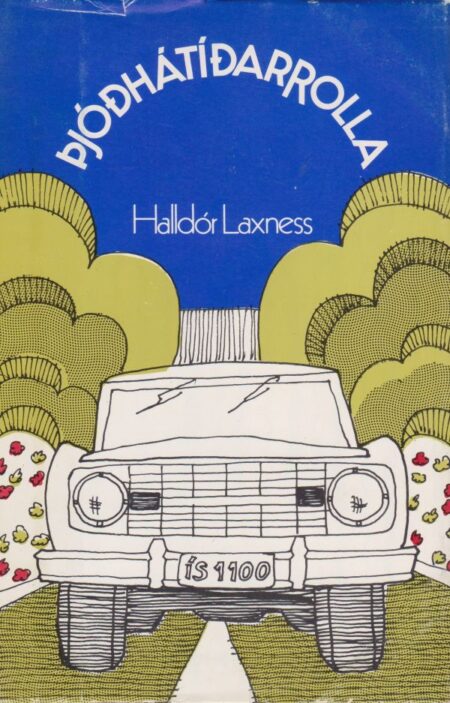
Þjóðhátíðarrolla
2.990 kr.Þetta ritgerðasafn, sem helgað er þjóðhátíð Íslendinga 1974, hefst á nafntogaðri ræðu höfundar á Þingvöllum 28. júlí. Á eftir fara ritgerðir um forna bókmenntasögu Íslendinga; Forneskjutaut, útfrá átrúnaði í fornöld og siðaskiptunum árið 1000, og Hvað var á undan íslendingasögum?, sem rekur á nýjan hátt samhengi fornbókmenntanna og skilning vorn á þeim gegnum Íslandssöguna. Báðar greinarnar eru stórmerkt framlag til þeirrar lífrænu sögulegu og fagurfræðilegu umræðu um fornbókmenntirnar, sem Halldór Laxness hefir lengi haldið uppi. Það eru einkum þessar greinar ásamt mörgum mannlýsingum, sem skipa Þjóðhátíðarrollu á bekk með beztu ritgerðasöfnum höfundar.
K. K.
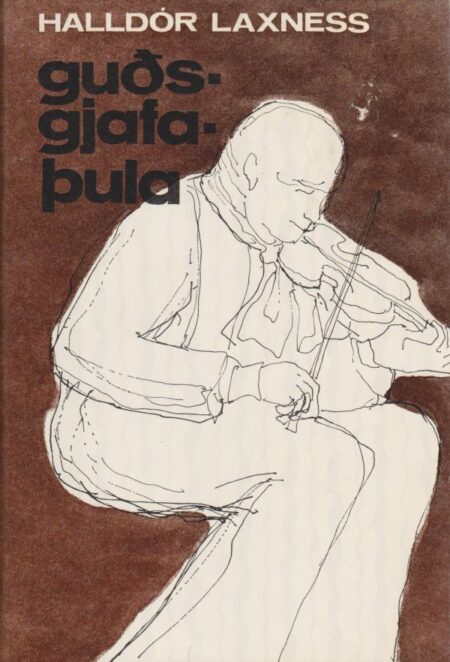
Guðsgjafaþula
2.990 kr.Guðsgjafaþula er rituð í endurminningastíl með tilstyrk „sögumanns“, greinargerð um liðið tímabil. Þessi sögumaður er rithöfundur, en verzlar líka með fugla. Hann kemur fyrst við í frásögn sinni árið 1920 í Kaupmannahöfn, þarnæst 1938 í norðlenzk-vestfirzku síldarplássi, Djúpvík. Og loks í London eftir síðara stríð. Þetta er hið mikla „tímabil norðurlandssíldarinnar“. Aðalsöguhetjan, Bersi Hjálmarsson, Íslandsbersi öðru nafni, er síldarspekúlant af þeirri tegund, sem uppi var í þann tíð. Reyndar er þessi síldarkaupmaður varla neinnar tegundar, hann er náttúrufyrirbæri og sögulegt undur. Hann er sömuleiðis einhver skemmtilegasta persóna, sem komið hefur fyrir í sögum Halldórs Laxness.
Síldin er alls staðar í baksýn, dularfull, óútreiknanleg, einnig þegar hún er komin á land. Henni fylgir rökleysi í lífi manna og athöfnum. Guðsgjafaþula er mikill aldarspegill. Siöalögmál, trú, pólitík, einkum verklýöspólitík þessa tíma, hættir manna, hugmyndir og búnaður, allt birtist í óvæntu og stundum miskunnarlausu ljósi. Samt er frásögn sögumanns blandin mikilli mildi. Hann er gestur í heimi athafnanna. Og það er Bersi Hjálmarsson reyndar líka. Hann er a.m.k. af tveimur heimum. En um það fjallar sagan.
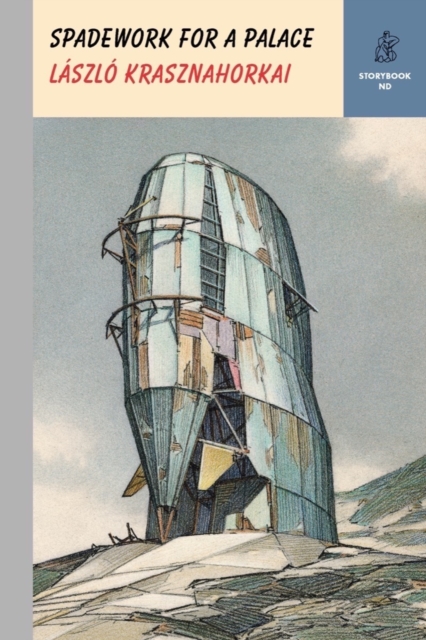
Spadework for a Palace
4.390 kr.Spadework for a Palace bears the subtitle “Entering the Madness of Others” and offers an epigraph: “Reality is no obstacle.” Indeed. This high-octane obsessive rant vaults over all obstacles, fueled by the idées fixe of a “gray little librarian” with fallen arches whose name—mr herman melvill—is merely one of the coincidences binding him to his lodestar Herman Melville (“I too resided on East 26th Street . . . I, too, had worked for a while at the Customs Office”), which itself is just one aspect of his also being “constantly conscious of his connectedness” to Lebbeus Woods, to the rock that is Manhattan, to the “drunkard Lowry” and his Lunar Caustic, to Bartok. And with this consciousness of connection he is not only gaining true knowledge of Melville, but also tracing the paths to “a Serene Paradise of Knowledge.” Driven to save that Palace (a higher library he also serves), he loses his job and his wife leaves him, but “people must be told the truth: there is no dualism in existence.” And his dream will be “realized, for I am not giving up: I am merely a day-laborer, a spade-worker on this dream, a herman melvill, a librarian from the lending desk, currently an inmate at Bellevue, but at the same time—may I say this?—actually a Keeper of the Palace.”
![Klukkan kallar [Hverjum klukkan glymur]](https://skalda.is/wp-content/uploads/2026/02/Klukkan-kallar-450x725.jpg)