-
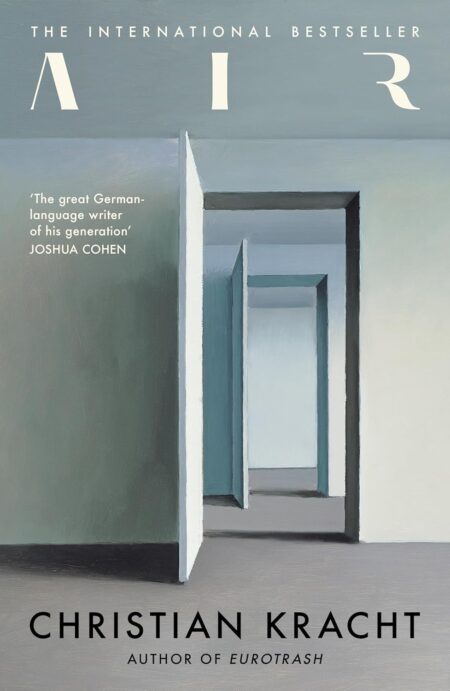
Air
3.990 kr.FROM THE INTERNATIONAL BOOKER NOMINATED AUTHOR OF EUROTRASH
‘Playfully surreal … Kracht has taken a a familiar premise and made it suggestively strange’ GUARDIAN
‘Sublime and funny … deserves to be his breakout book in the Anglophone world’ TELEGRAPH, 5-STAR REVIEW
‘A master of the well-formed sentence’ DANIEL KEHLMANN
Two men venture through strange landscapes towards unknowable destinations. Paul, a feted designer, wanders the echoing corridors of a server farm in Norway – before, in a sudden blackout, he seems to vanish. In another time and space, a wounded stranger wakes in a forest, watched over by a young girl who helps him flee to an icebound settlement where perhaps he will find safety.
Inventive, enigmatic and chromatically resonant, Air is the seductively disorienting new novel from one of the most significant European writers working today. Heir to the ingenious fictions of Ursula K. Le Guin or Jorge Luis Borges, resistant to single interpretation, it unfolds as a haunting journey through a layered universe that may be a dream, the afterlife or reality’s inverted twin.
‘Air is as enigmatic as its title’ TLS
‘Christian Kracht is the great German-language writer of his generation’ JOSHUA COHEN
‘Read him for the experience of reading him. Read him and wonder’ NELL ZINK
Translated from German by Daniel Bowles
-

Microscripts
4.990 kr.A Chirstine Burgin co-publication Now in paperback, with newly translated, additional microscripts and full-color paintings by Maira Kalman.
Robert Walser wrote many of his manuscripts in a highly enigmatic, shrunken-down form. These narrow strips of paper (many of them written during his hospitalization in the Waldau sanatorium) covered with tiny ant-like markings only a millimeter or two high, came to light only after the author’s death in 1956. At first considered a secret code, the microscripts were eventually discovered to be a radically miniaturized form of a Germanic script: a whole story could fit on the back of a business card. Selected from the six-volume German transcriptions from the original microscripts, these twenty-five short pieces are gathered in this gorgeously illustrated co-publication with the Christine Burgin Gallery. Each microscript is reproduced in full color in its original form: the detached cover of a trashy crime novel, a disappointing letter, a receipt of payment. Sometimes Walser used the pages of small tear-off calendars (but only after cutting them lengthwise and filling up each half with text). Schnapps, rotten husbands, small town life, the radio, pigs (and how none of us can deny being one), jealousy, Van Gogh and marriage proposals are some of Walser’s subjects. These texts take strength from Walser’s motto: “To be small and to stay small.”
-
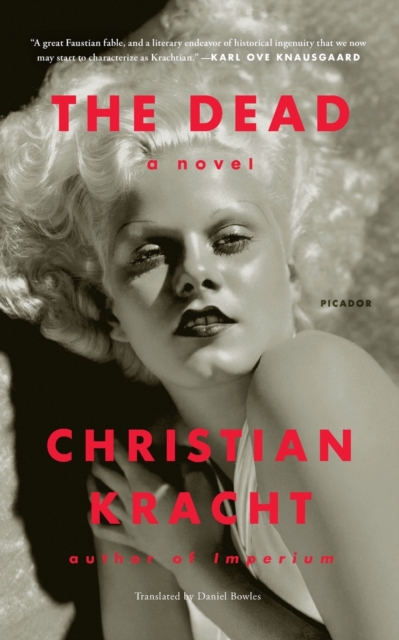
The Dead
3.990 kr.“A great Faustian fable, and a literary endeavor of historical ingenuity that we now may start to characterize as Krachtian.” ―Karl Ove Knausgaard
The follow-up to Christian Kracht’s acclaimed novel Imperium (a Publishers Weekly Best Book of the Year), The Dead mines the feverish early years of the Nazis’ rise to power for a Gothic tale of global conspiracy, personal loss, and historical entanglements large and small.
In Berlin, Germany, in the early 1930s, the acclaimed Swiss film director Emil Nägeli receives the assignment of a lifetime: travel to Japan and make a film to establish the dominance of Adolf Hitler’s Nazi empire once and for all. But his handlers are unaware that Nägeli has colluded with the Jewish film critics to pursue an alternative objective―to create a monumental, modernist, allegorical spectacle to warn the world of the horror to come.
Meanwhile, in Japan, the film minister Masahiko Amakasu intends to counter Hollywood’s growing influence and usher in a new golden age of Japanese cinema by exploiting his Swiss visitor. The arrival of Nägeli’s film-star fiancée and a strangely thuggish, pistol-packing Charlie Chaplin―as well as the first stirrings of the winds of war―soon complicates both Amakasu’s and Nägeli’s plans, forcing them to face their demons . . . and their doom.
“The Dead is the beautiful, brilliant, and utterly mad novel that Thomas Mann would have written had he known the East like Yukio Mishima and loved his adopted Hollywood with the gusto of Nathanael West.” ―Joshua Cohen
“The Dead is a story of love and sadness in times when the weak were broken by the unforgiving ideologies of fascism and National Socialism . . . I read The Dead twice in a row, first for the story and then for the beauty of the prose.” ―Sjón
-
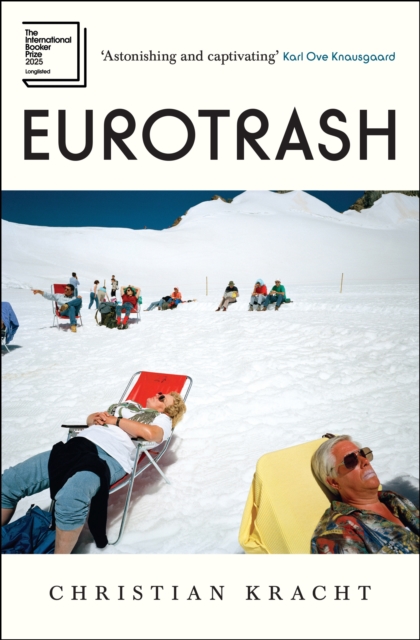
Eurotrash
3.490 kr.INTERNATIONAL BOOKER PRIZE NOMINEE 2025
‘Odd and evocative, a frolicking rumination’ TIMES CRITICS’ BEST BOOK OF THE YEAR
‘Hilarious, unsettling and unexpectedly moving’ FINANCIAL TIMES BEST TRANSLATED BOOK OF THE YEAR
‘Astonishing and captivating’ KARL OVE KNAUSGAARD
‘Christian Kracht is the great German-language writer of his generation’ JOSHUA COHENRealising he and she are the worst kind of people, a middle-aged man embarks on a dubious road trip through Switzerland with his eighty-year-old mother, recently discharged from a mental institution. Driving across the country, they attempt to give away her arms-industry wealth, but a fortune of such immensity is hard to squander. Haunted in different ways by the figure of her father, an ardent supporter of Nazism, mother and son can no longer avoid delving into the darkest truths about their past.
Eurotrash is an unsparingly funny, vertiginous mirror-cabinet of familial and historical reckoning, a tragicomic quest punctuated by the tenderness and spite meted out between two people who cannot escape one another.
‘There’s a refreshing, bright moral clarity to Eurotrash‘ NELL ZINK
‘Brilliantly caustic’i PAPERTRANSLATED BY DANIEL BOWLES
-
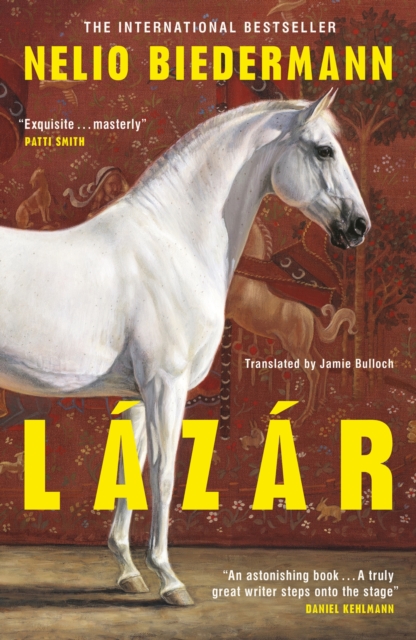
Lázár (stór kilja)
4.690 kr.The Lazars have ruled their Hungarian lands for generations.
In their ancient castle by the edge of a forest that compels all who enter it to madness, they succumb to every vice and live only to satiate their desires. But the old order is crumbling, and the days of the Habsburg Monarchy are numbered. When Lajos von Lazar inherits, they at last have a baron who can reignite the old splendours, but not even his abilities are proof against the ravages of war and occupation.
It will fall to his children – a boy who talks to shadows and a girl who eschews her blue blood – to find a way to stand against oppression and take the first faltering steps towards freedom.
A sweeping epic, taking the reader from the beginning of the twentieth century to the Hungarian National Uprising of 1956, Lazar would be a phenomenal achievement for a writer of any age. With its air of timeless wisdom, it reads like rediscovered classic, making it all the more remarkable that it was written when the author was just twenty-one years old.
Translated from the German by Jamie Bulloch
-
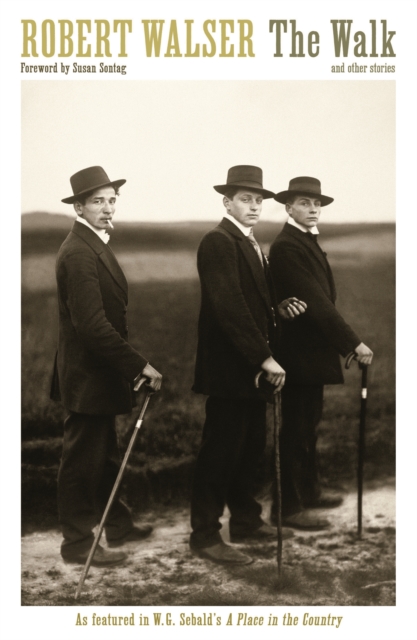
The Walk
3.690 kr.Ranging from one-page fantasies to novella-length studies of everyday existence, The Walk reveals the irresistible genius of one of the twentieth century”s greatest writers. Under-appreciated even in his own lifetime, Robert Walser has nonetheless been recognised by such writers as W.G. Sebald, Susan Sontag, Franz Kafka, Herman Hesse and J.M. Coetzee.
Like Kafka and Sebald, Walser wrote about the solitude and unease of human existence. Honest, wry and idiosyncratic, his stories are snapshots of the lives great artists, poor young men, beautiful women and talking animals alike. Ranging from the realist to the allegorical, the short fiction collected in this volume demonstrates Walser”s uncanny ability to capture both life”s strangeness and its small joys.
-
-