
An archaeologist travels to a distant planet to spend time among a mysterious community, a people who live in temperature-controlled domes, worship a deity called Dog, and repeat an elliptical phrase from which they draw their name: mulai, the tree comes. The descendants of a long-forgotten space mission, the Mulai have abandoned the social norms that once bound them to Earth. Over centuries of isolation, their language has become more about change than stability, and the ways they eat, write, reproduce, bury their dead and understand gender have all transformed into something almost unrecognizable. As the archaeologist records his attempts to understand their world – a strange negative of our own – questions of translation, meaning-making and the ultimate precarity of civilization come to the fore. Drawing on Borges, Le Guin and Calvino, The Mulai is a mind-bending work of metafiction whose interlocking puzzles resound with Munir Hachemi’s singularly playful and eclectic style.
-

Fictions
3.690 kr.The most popular anthology of Jorge Luis Borges’s short stories, Fictions is a wildly original and influential collection of fantastic tales, translated from the Spanish with an afterword by Andrew Hurley in Penguin Modern Classics.
Jorge Luis Borges’s Fictions introduced an entirely new voice into world literature. It is here that we find the astonishing accounts of ‘Funes the Memorious’, the man who can forget nothing; ‘Pierre Menard, Author of the Quixote‘, who recreates Miguel de Cervantes’s epic word-for-word; a society run on the basis of an all-encompassing game of chance in ‘The Lottery in Babylon’; the mysterious world of ‘Tlön, Uqbar, Orbis Tertius’ which seems to be supplanting our own ; and the ‘Library of Babel’, which contains every possible book in the whole universe. Here too are the philosophical detective stories and the haunting tales of Irish revolutionaries, gaucho knife fights and dreams within dreams which proved so influential (and yet impossible to imitate). This collection was eventually to bring Borges international fame; over fifty years later, it remains endlessly intriguing.
Jorge Luis Borges (1899-1986) was born in Buenos Aires, Argentina. A poet, critic and short story writer, he received numerous awards for his work including the 1961 International Publisher’s Prize (shared with Samuel Beckett). He has a reasonable claim, along with Kafka and Joyce, to be one of the most influential writers of the 20th century.
If you enjoyed Fictions, you might like Italo Calvino’s The Complete Cosmicomics, also available in Penguin Modern Classics.
‘Hurley’s efforts at retranslating Borges are not anything but heroic. His visions are clear, elegant, crystalline’
Ilan Savans, The Times Literary Supplement‘One of the most memorable artists of our age’
Mario Vargas Llosa -
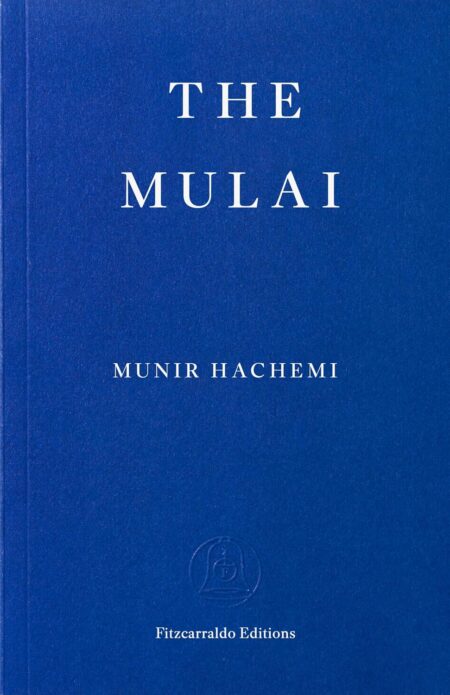
Mulai
3.990 kr.‘The Mulai [is] Hachemi’s second short novel to be translated from Spanish to English by Julia Sanches, whose rendering of Hachemi’s prose always sounds alive and attuned to the nuances of the original … [I]t is both playful and hedonistic, and the work of a writer who takes an original approach to exploring the instability of language, identity and, in this extraplanetary experiment, what might lie beyond.’
— Max Liu, Financial Times‘A meditation on the mutability of identity and language … wild, insightful and impressive.’
— Publishers Weekly‘Hachemi is a skilled, imaginative and versatile writer, capable of shifting between academic vernacular and poeticism…. [W]hen the pieces fall into place, the results are gratifying.’
— Fonie Mitsopoulou, Literary Review‘Munir Hachemi’s new work of speculative fiction manages to be many things all at once…. Much pleasure can be derived from reading between [the] gaps in years, voices and worlds, just as much hope can be derived from Hachemi’s construction of a new, imperfect but freer world.’
— Alex Howlett, Times Literary Supplement‘Upending established notions of supremacy, truth and religion, this is a daring novel narrated in strange and twisting language. It is made up of bits of translated text, field notes, interviews and instances of human searching that are divided by generations. The revelations it proffers are life-giving. “Only when we encounter the other can we truly see ourselves” asserts The Mulai, a paradigm-shattering speculative novel set on a distant planet.’
— Michelle Schlinger, Foreword Reviews‘In The Mulai, Munir Hachemi conjures a mythic future history with all the heartbreak, mystery and absurdity of truth. With cheeky brilliance (and with translator Julia Sanches as a hovering ghost-in-the-machine presence), Hachemi co-opts the tropes of ethnography and intergalactic colonialism to imagine a queer, eschatological Eden, where culture is story and story is an alchemical compost pile of language decomposed and recomposed.’
— Anne de Marcken, author of It Lasts Forever and Then It’s Over‘A beguiling tale of Otherness that is not only a translation from another language but another planet, a story told so well that every familiar word feels as new as an alien horizon.’
— Anton Hur, author of Toward Eternity‘Munir Hachemi has created an interplanetary cargo cult and I’m ready to sign up. This exuberant voyage through space and time destabilizes our understanding of human (and not-so-human) civilization and religion through endlessly inventive riffs on language, translation and intertextuality. Julia Sanches’ playful, acrobatic rendering is the perfect accompaniment to this wild ride.’
— Jeremy Tiang, author of State of Emergency‘The Mulai is a fascinating exploration of the many languages, fears and desires that give rise to a culture – and to the very experience of what we call literature. Munir Hachemi writes with a fresh, original voice that calls to mind Saer, Borges, Calvino, and the finest speculative fiction.’
— Simón López Trujillo, author of Pedro the Vast‘If Borges wrote hard science fiction, it might well look like this … You can almost feel the author grinning at you as you read, and I daresay you’ll end up grinning back by the end.’
— Drew Broussard, LitHub -

Bad Habit
3.490 kr.Beautifully written and told in an irresistible voice, Bad Habit is a powerfully moving coming-of-age novel following a young trans woman in 1980s Madrid. An unnamed young trans woman grows up in a working-class suburb that has no place for her. She discovers community and kinship in downtown Madrid, amid a dazzling party scene animated by charming junkies, glamorous pop divas, and fallen angels.
With each step she takes forward in the city, she finds herself confronted by an antagonism she does not yet know how to counter. In this thrilling and yet often frightening place each decision can have the highest of stakes and yet she knows that only she can forge a path forward to the life she truly wants to live. Beautiful and deeply moving, Bad Habit by Alana S Portero is translated by Mara Faye Lethem, and deftly illuminates the search for identity and the power of chosen family.
Bad Habit is an unforgettable story of self-realisation that speaks to the outsider in all of us.
-
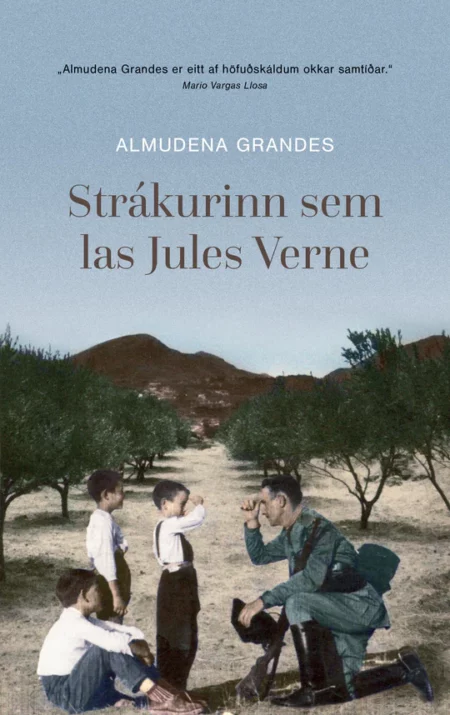
Strákurinn sem las Jules Verne
4.390 kr.Ég tók upp bókina, sneri henni við og las nafnið Jules Verne og titilinn Grant skipstjóri og börn hans prentað gylltum stöfum á litaða kápumynd sem sýndi furðulegan leiðangur í undarlegu landslagi. „Hvar fékkstu þessa bók?“ spurði ég.
Strákurinn sem las Jules Verne er áhrifamikil söguleg skáldsaga sem gerist á Spáni á fimmta áratug síðustu aldar. Nino er níu ára gamall og elst upp í búðum Þjóðvarðliðsins í bænum Fuensanta de Martos. Sumarið 1947 kemur hinn dularfulli Pepe Portúgali til bæjarins og sest þar að í gamalli, yfirgefinni myllu. Pepe verður besti vinur hins veiklulega og lágvaxna Ninos.
Vinskapur þeirra og lestur bóka Jules Verne verður til þess að Nino fer að sjá skæruhernaðinn á heimaslóðum sínum undir forystu hins goðsagnakennda leiðtoga Cencerro í nýju ljósi. En Nino gætir þess vandlega að halda því fyrir sig hvers hann verður áskynja.
-
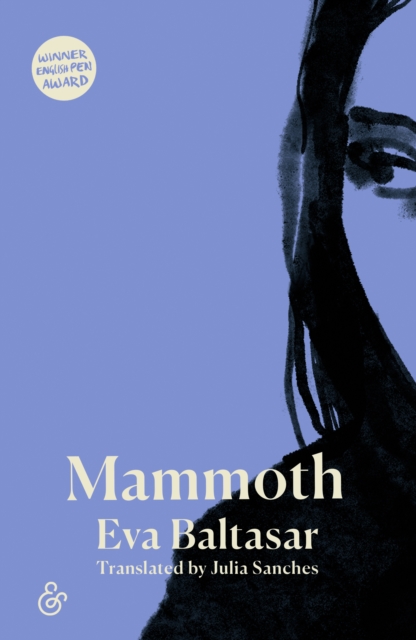
Mammoth
3.990 kr.Mammoth’s protagonist is a disenchanted young lesbian. She’s inexperienced, irritated by life, eager to gestate, and determined to strip everything else down to essentials. She seduces men at random, swaps her urban habitat for an isolated farmhouse, befriends a shepherd, nurses lambs, battles stray cats, waits tables, cleans house, and dabbles in sex work – all in pursuit of life in the raw.
This small bomb of a novel, not remotely pastoral, builds to a howling crescendo of social despair, leaving us at the mercy of Eva Baltasar’s wild voice.
-

-

Við tölum ekki um þetta
4.390 kr.Gríðarlega áhrifarík, hugrökk, erfið og átakanleg saga andspænis hinu versta sem getur gerst.
Hér vefur Alejandro Palomas kyrrlátan og rafmagnaðan þráð svo úr verður saga sem rekur erfiðar bernskuminningar, einstakt samband hans við móður sína, skugga ósýnilegs föður og óheft ímyndunaraflið. Þetta er einlægur vitnisburður manns sem valdi að lifa – þökk sé ástríðu hans fyrir að skrifa sögur. Af blaðsíðunum stafar blíðu og kímni, trega og ást.
Skáldskapurinn gerði honum kleift að skapa ímyndaða veröld sem var betri en myrkrið sem umlukti hann og í gegnum árin hefur þessi skáldskapur hjálpað honum að finna orðin til að segja frá sannleikanum – öllum sannleikanum.
„Og sannleikurinn er sá að án allra þessara kvenna í lífi mínu hefði ég líklega ekki faðmað aftur.“
Algerlega mögnuð bók
-
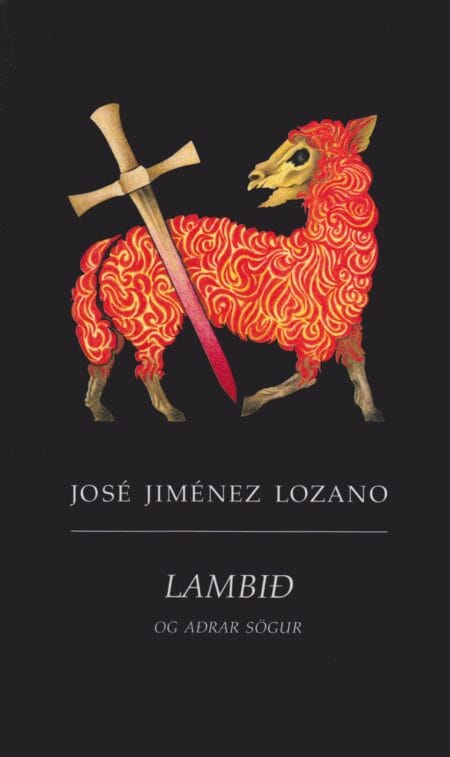
Lambið og aðrar sögur
1.290 kr.ÞESSI BÓK geymir úrval þriggja smásagnasafna eftir einn athyglisverðasta höfund Spánar í seinni tíð, José Jiménez Lozano.
Meginviðfangsefni höfundar er ýmsir atburðir í sögu Spánar fyrr og síðar, einkum þeir sem varða kirkju og kristni. En höfundur er ekki að predika frekar en aðrir miklir listamenn. Eða eins og segir m.a. í eftirmála þýðenda: „Sögur hans birta ekki trúarlegan boðskap sem færður hefur verið í skáldlegan búning, heldur leitast hann við að sýna okkur menn af holdi og blóði í kröm sinni sem oftar en ekki snertir trúhneigð þeirra og afstöðu; en hann gerir það þannig að samúðin vegur alltaf upp á móti miskunnarleysi efnisins.“
Jón Thoroddsen og Kristín Jónsdóttir þýddu.
-
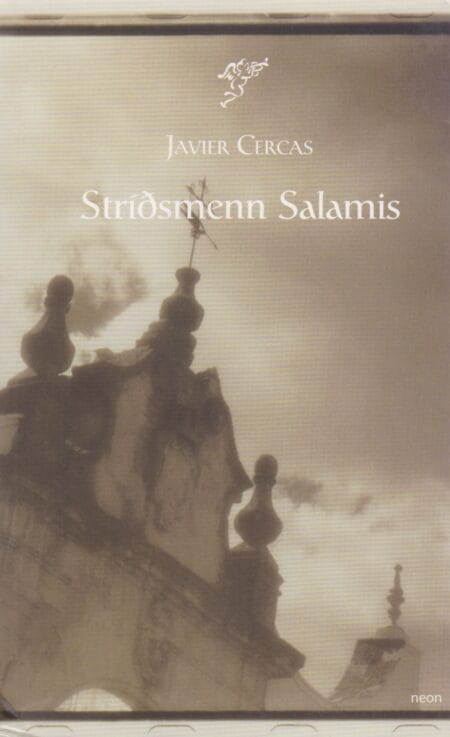
Stríðsmenn Salamis
1.290 kr.Býsna ótrúleg saga, sagði hann svo með hlutlausum málrómi um leið og hann dró sígarettu upp úr hálfa pakkanum frá því um morguninn. En öll stríð eru full af ótrúlegum sögum, er það ekki?
Á síðustu dögum spænsku borgarastyrjaldarinnar stendur rithöfundurinn Sánchez Mazas ásamt fleiri föngum úr hópi falangista frammi fyrir aftökusveit lýðveldissinna. Um leið og vélbyssuskothríðin hefst notfærir hann sér ringulreiðina sem skapast og hleypur til skógar. Hermennirnir veita honum eftirför, einn þeirra finnur Mazas í felum, horfir í augu hans en gengur svo á braut.
Í Stríðsmönnum Salamis leitar spænski rithöfundurinn Javier Cercas svara við því hver óþekkti hermaðurinn var og hvers vegna hann þyrmdi lífi manns sem var alræmdasti hugmyndafræðingur falangista og átti eftir að verða ráðherra í fyrstu ríkisstjórn Francos. Mögnuð og margverðlaunuð bók um hlutskipti mannsins á tímum stríðsátaka, lyga og óvænts hetjuskapar.
Jón Hallur Stefánsson þýddi.