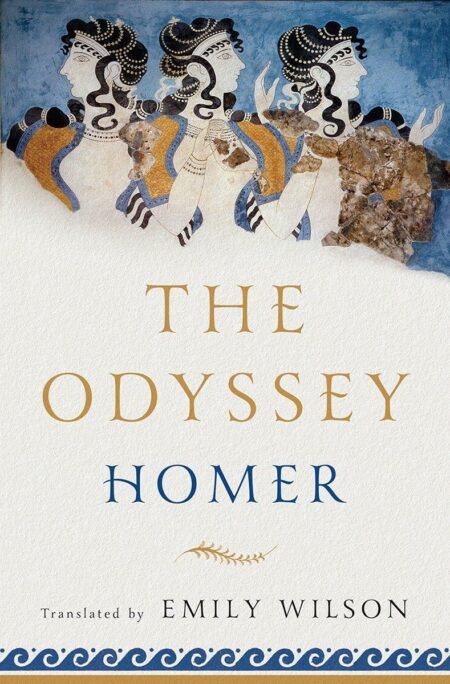
The Odyssey
7.490 kr.Glæsileg innbundin útgáfa af rómaðri þýðingu Emily Wilson á þessu sígilda bókmenntaverki.
The first great adventure story in the Western canon, The Odyssey is a poem about violence and the aftermath of war; about wealth, poverty, and power; about marriage and family; about travelers, hospitality, and the yearning for home.
In this fresh, authoritative version―the first English translation of The Odyssey by a woman―this stirring tale of shipwrecks, monsters, and magic comes alive in an entirely new way. Written in iambic pentameter verse and a vivid, contemporary idiom, this engrossing translation matches the number of lines in the Greek original, thus striding at Homer’s sprightly pace and singing with a voice that echoes Homer’s music.
Wilson’s Odyssey captures the beauty and enchantment of this ancient poem as well as the suspense and drama of its narrative. Its characters are unforgettable, from the cunning goddess Athena, whose interventions guide and protect the hero, to the awkward teenage son, Telemachus, who struggles to achieve adulthood and find his father; from the cautious, clever, and miserable Penelope, who somehow keeps clamoring suitors at bay during her husband’s long absence, to the “complicated” hero himself, a man of many disguises, many tricks, and many moods, who emerges in this translation as a more fully rounded human being than ever before.
A fascinating introduction provides an informative overview of the Bronze Age milieu that produced the epic, the major themes of the poem, the controversies about its origins, and the unparalleled scope of its impact and influence. Maps drawn especially for this volume, a pronunciation glossary, and extensive notes and summaries of each book make this an Odyssey that will be treasured by a new generation of scholars, students, and general readers alike.
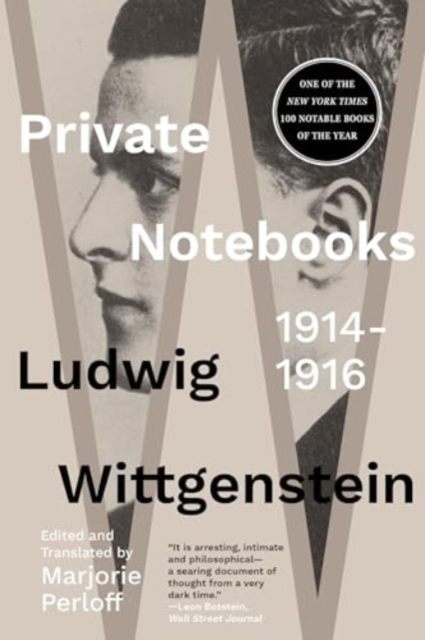
Private Notebooks: 1914-1916
4.390 kr.During the pandemic, Marjorie Perloff, one of our foremost scholars of global literature, found her mind ineluctably drawn to the profound commentary on life and death in the wartime diaries of eminent philosopher Ludwig Wittgenstein (1889–1951). Upon learning that these notebooks, which richly contextualise the early stages of his magnum opus, the Tractatus-Logico-Philosophicus, had never before been published in English, the Viennese-born Perloff determinedly set about translating them. Beginning with the anxious summer of 1914, this historic, en-face edition presents the first-person recollections of a foot soldier in the Austrian Army, fresh from his days as a philosophy student at Cambridge, who must grapple with the hazing of his fellow soldiers, the stirrings of a forbidden sexuality, and the formation of an explosive analytical philosophy that seemed to draw meaning from his endless brushes with death.
Much like Tolstoy’s The Gospel in Brief, Private Notebooks takes us on a personal journey to discovery as it augments our knowledge of Wittgenstein himself.
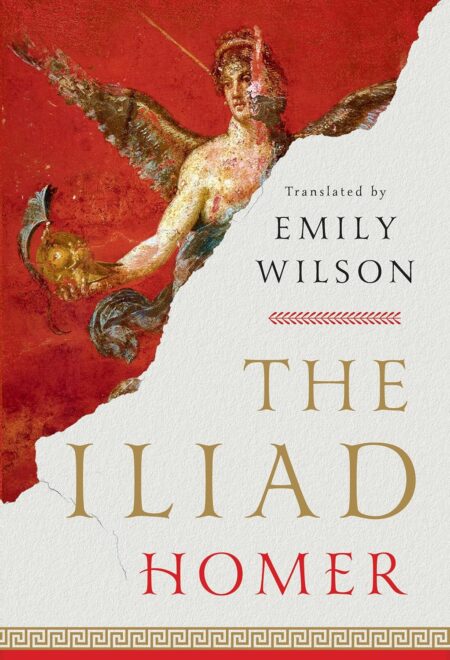
The Iliad
4.390 kr.“Wilson’s Iliad is clear and brisk, its iambic pentameter a zone of enchantment.” ―Ange Mlinko, London Review of Books
The greatest literary landmark of antiquity masterfully rendered by the most celebrated translator of our time.
When Emily Wilson’s translation of The Odyssey appeared in 2017―revealing the ancient poem in a contemporary idiom that was “fresh, unpretentious and lean” (Madeline Miller, Washington Post)―critics lauded it as “a revelation” (Susan Chira, New York Times) and “a cultural landmark” (Charlotte Higgins, Guardian) that would forever change how Homer is read in English. Now Wilson has returned with an equally revelatory translation of Homer’s other great epic―the most revered war poem of all time.
The Iliad roars with the clamor of arms, the bellowing boasts of victors, the fury and grief of loss, and the anguished cries of dying men. It sings, too, of the sublime magnitude of the world―the fierce beauty of nature and the gods’ grand schemes beyond the ken of mortals. In Wilson’s hands, this thrilling, magical, and often horrifying tale now gallops at a pace befitting its legendary battle scenes, in crisp but resonant language that evokes the poem’s deep pathos and reveals palpably real, even “complicated,” characters―both human and divine.
The culmination of a decade of intense engagement with antiquity’s most surpassingly beautiful and emotionally complex poetry, Wilson’s Iliad now gives us a complete Homer for our generation.