-
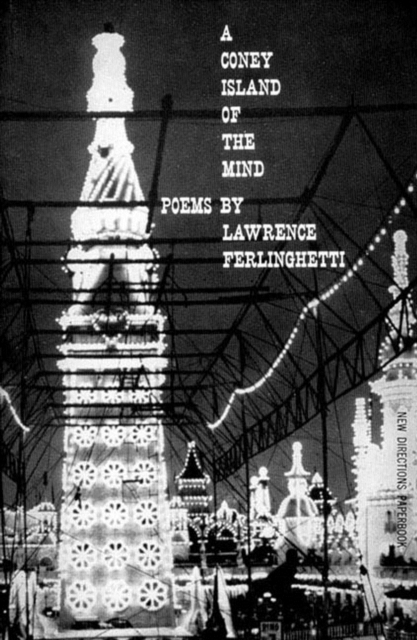
A Coney Island of the Mind
3.490 kr.The title of this book is taken from Henry Miller’s “Into the Night Life” and expresses the way Lawrence Ferlinghetti felt about these poems when he wrote them during a short period in the 1950’s—as if they were, taken together, a kind of Coney Island of the mind, a kind of circus of the soul.
Ferlinghetti’s A Coney Island of the Mind has become a modern classic. It has been translated into nine languages and there are now three-quarters of a million copies in print.
-

Microscripts
4.990 kr.A Chirstine Burgin co-publication Now in paperback, with newly translated, additional microscripts and full-color paintings by Maira Kalman.
Robert Walser wrote many of his manuscripts in a highly enigmatic, shrunken-down form. These narrow strips of paper (many of them written during his hospitalization in the Waldau sanatorium) covered with tiny ant-like markings only a millimeter or two high, came to light only after the author’s death in 1956. At first considered a secret code, the microscripts were eventually discovered to be a radically miniaturized form of a Germanic script: a whole story could fit on the back of a business card. Selected from the six-volume German transcriptions from the original microscripts, these twenty-five short pieces are gathered in this gorgeously illustrated co-publication with the Christine Burgin Gallery. Each microscript is reproduced in full color in its original form: the detached cover of a trashy crime novel, a disappointing letter, a receipt of payment. Sometimes Walser used the pages of small tear-off calendars (but only after cutting them lengthwise and filling up each half with text). Schnapps, rotten husbands, small town life, the radio, pigs (and how none of us can deny being one), jealousy, Van Gogh and marriage proposals are some of Walser’s subjects. These texts take strength from Walser’s motto: “To be small and to stay small.”
-

Chasing Homer
4.690 kr.In this chase thriller, a hunted being escapes certain death at breakneck speed—careening through Europe, heading blindly South. Faster and faster, escaping the assassins, our protagonist flies forward, blending into crowds, adjusting to terrains, hopping on and off ferries, always desperately trying to stay a step ahead: I’m a prisoner of the instant, an I rush into this instant, an instant that has no continuation, just as it has no earlier version, and I have to tell myself—if I had the time to think about this between two instants—that I have no need for either past or future because neither one exists. But in fact, I have no time between two instants. Since there’s no such thing as two instants.
László Krasznahorkai—celebrated for the exhilarating energy of his prose—outdoes himself in Chasing Homer. A classic escape nightmare, the book is sped on not only by that signature velocity, but also—reaching out of the story proper—by the wild percussive music of Szilveszter Miklós, scored for each chapter, and accessed by the reader via QR codes. And this unique collaboration also boasts beautiful and intense full-color paintings by Max Neumann.
-

Things That Disappear
3.690 kr.The bestselling and award-winning German author Jenny Erpenbeck has gained international praise for her novels including Visitation, Kairos, and Go, Went, Gone. Things That Disappear is an exciting collection of interlinked miniature prose pieces that grapple with the phenomenon of disappearance on scales both large and small. The things that disappear in these pages range from everyday objects such as socks and cheese to close friends and the social norms of common courtesy, to sites and objects resonant with East German history, such as the Palace of the Republic or the lines of sight now blocked by new construction in Berlin. Erpenbeck asks: “Is there a perpetrator who makes things that I know and cherish disappear?” These things disappear, and yet do they really? Do they remain in our memories more fully than if they continued to exist? Translated beautifully by Kurt Beals, Things That Disappear follows on the heels of Erpenbeck’s Booker Prize–winning novel Kairos and offers a window into a renowned writer’s sense of the past, and of her own self as a writer.
-
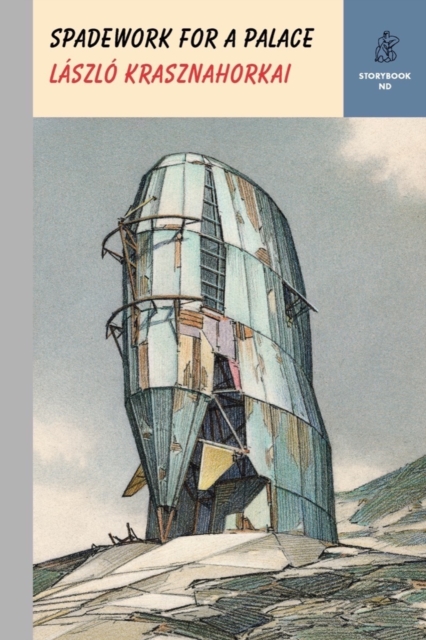
Spadework for a Palace
4.390 kr.Spadework for a Palace bears the subtitle “Entering the Madness of Others” and offers an epigraph: “Reality is no obstacle.” Indeed. This high-octane obsessive rant vaults over all obstacles, fueled by the idées fixe of a “gray little librarian” with fallen arches whose name—mr herman melvill—is merely one of the coincidences binding him to his lodestar Herman Melville (“I too resided on East 26th Street . . . I, too, had worked for a while at the Customs Office”), which itself is just one aspect of his also being “constantly conscious of his connectedness” to Lebbeus Woods, to the rock that is Manhattan, to the “drunkard Lowry” and his Lunar Caustic, to Bartok. And with this consciousness of connection he is not only gaining true knowledge of Melville, but also tracing the paths to “a Serene Paradise of Knowledge.” Driven to save that Palace (a higher library he also serves), he loses his job and his wife leaves him, but “people must be told the truth: there is no dualism in existence.” And his dream will be “realized, for I am not giving up: I am merely a day-laborer, a spade-worker on this dream, a herman melvill, a librarian from the lending desk, currently an inmate at Bellevue, but at the same time—may I say this?—actually a Keeper of the Palace.”
-

The Setting Sun
3.690 kr.Set in the early postwar years, it probes the destructive effects of war and the transition from a feudal Japan to an industrial society. Ozamu Dazai died, a suicide, in 1948. But the influence of his book has made “people of the setting sun” a permanent part of the Japanese language, and his heroine, Kazuko, a young aristocrat who deliberately abandons her class, a symbol of the anomie which pervades so much of the modern world.
-
Love Poems
3.490 kr.Charged with sensuality and passion, Pablo Neruda’s love poems caused a scandal when published anonymously in 1952. In later editions, these verses became the most celebrated of the Noble Prize winner’s oeuvre, captivating readers with earthbound images that reveal in gentle lingering lines an erotic re-imagining of the world through the prism of a lover’s body: “today our bodies became vast, they grew to the edge of the world / and rolled melting / into a single drop / of wax or meteor….” Written on the paradisal island of Capri, where Neruda “took refuge” in the arms of his lover Matilde Urrutia, Love Poems embraces the seascapes around them, saturating the images of endless shores and waves with a new, yearning eroticism. This wonderful book collects Neruda’s most passionate verses.
-

No Longer Human
3.690 kr.The poignant and fascinating story of a young man who is caught between the breakup of the traditions of a northern Japanese aristocratic family and the impact of Western ideas.
Portraying himself as a failure, the protagonist of Osamu Dazai’s No Longer Human narrates a seemingly normal life even while he feels himself incapable of understanding human beings. Oba Yozo’s attempts to reconcile himself to the world around him begin in early childhood, continue through high school, where he becomes a “clown” to mask his alienation, and eventually lead to a failed suicide attempt as an adult. Without sentimentality, he records the casual cruelties of life and its fleeting moments of human connection and tenderness.
-
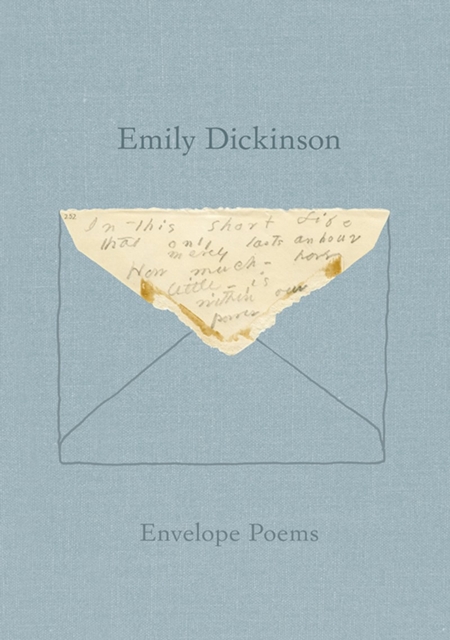
Envelope Poems
3.990 kr.Although a very prolific poet—and arguably America’s greatest—Emily Dickinson (1830–1886) published fewer than a dozen of her eighteen hundred poems. Instead, she created at home small handmade books. When, in her later years, she stopped producing these, she was still writing a great deal, and at her death she left behind many poems, drafts, and letters.
It is among the makeshift and fragile manuscripts of Dickinson’s later writings that we find the envelope poems gathered here. These manuscripts on envelopes (recycled by the poet with marked New England thrift) were written with the full powers of her late, most radical period. Intensely alive, these envelope poems are charged with a special poignancy—addressed to no one and everyone at once.
Full-color facsimiles are accompanied by Marta L. Werner and Jen Bervin’s pioneering transcriptions of Dickinson’s handwriting. Their transcriptions allow us to read the texts, while the facsimiles let us see exactly what Dickinson wrote (the variant words, crossings-out, dashes, directional fields, spaces, columns, and overlapping planes).