-
-
Feeding the Monster: Why horror has a hold on us
3.690 kr.Zombies want brains. Vampires want blood. Cannibals want human flesh.
All monsters need feeding. Horror has been embraced by mainstream pop culture more than ever before, with horror characters and aesthetics infecting TV, music videos and even TikTok trends. Yet even with the commercial and critical success of The Babadook, Hereditary, Get Out, The Haunting of Hill House, Yellowjackets and countless other horror films and TV series over the last few years, loving the genre still prompts the question: what’s wrong with you? Implying, of course, that there is something not quite right about the people who make and consume it.
In Feeding the Monster, Anna Bogutskaya dispels this notion once and for all by examining how horror responds to and fuels our feelings of fear, anxiety, pain, hunger and power.
-
On the Calculation of Volume III
3.990 kr.Tara Selter is no longer alone. Tara Selter has lived the eighteenth of November 1,143 times when she notices a break in the pattern: a man has changed his shirt. The man is Henry Dale, and he remembers all the days that have come before.He knows that time has fallen out of joint. Now they are two of a kind – trapped in the eighteenth of November, but no longer alone.
Together they learn to share their present; their voices grow hoarse recounting their small battles against it and their bewilderment at the disintegrating world. Henry sees things differently to Tara: he does not think that time will put itself back together and he does not think that the future will come around. But he makes her realise that she is no longer the same person she was before this fault in time. And he makes her believe that there may be others to find within it.
-
Parade
3.490 kr.Midway through his life, an artist begins to paint upside down.
In Paris, a woman is attacked by a stranger in the street.
A mother dies. A man falls to his death. Couples seek escape in distant lands.
The new novel from one of the most distinctive writers of the age, Parade sets loose a carousel of lives. It surges past the limits of identity, character, and plot, to tell a true story – about art, family, morality, gender, and how we compose ourselves.
-
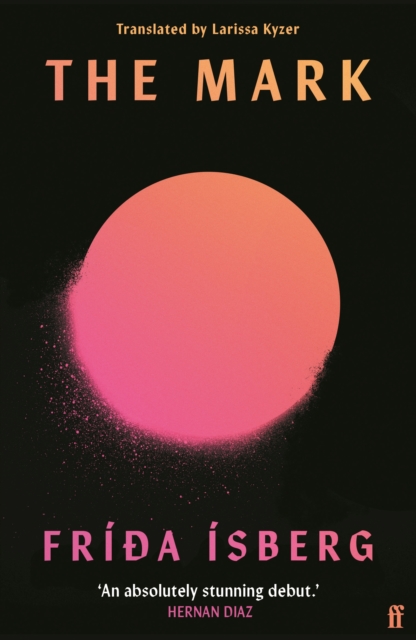
The Mark
3.490 kr.The Icelandic Psychological Association has prepared a test. They call it a sensitivity assessment: a way of measuring a person’s empathy and identifying the potential for anti-social behaviour.
In a few days’ time, Iceland will vote on whether to make the test compulsory for every citizen. The nation is bitterly divided. Some believe the test makes society safer; others decry it as a violation.
As the referendum draws closer, four people – Vetur, Eyja, Tristan and Ólafur – find themselves caught in the teeth of the debate. Each of them will have to reckon with uncomfortable questions: Where do the rights of society end and the rights of the individual begin? When does utopia become dystopia?No matter which side wins, they will all have to find a way to live with the result.
-
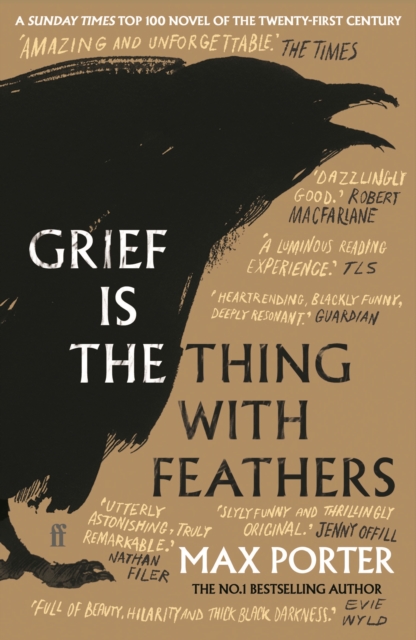
Grief Is the Thing with Feathers
3.490 kr.In a London flat, two young boys face the unbearable sadness of their mother’s sudden death. Their father, a Ted Hughes scholar and scruffy romantic, imagines a future of well-meaning visitors and emptiness. In this moment of despair they are visited by Crow – antagonist, trickster, healer, babysitter.
This sentimental bird is drawn to the grieving family and threatens to stay until they no longer need him. In a London flat, two young boys face the unbearable sadness of their mother’s sudden death. Their father, a Ted Hughes scholar and scruffy romantic, imagines a future of well-meaning visitors and emptiness.
In this moment of despair they are visited by Crow – antagonist, trickster, healer, babysitter. This sentimental bird is drawn to the grieving family and threatens to stay until they no longer need him. As weeks turn to months and the pain of loss gives way to memories, the little unit of three starts to heal.
Max Porter’s extraordinary debut – part novella, part polyphonic fable, part essay on grief – marked the arrival of a thrilling new literary talent. Ten years on, readers continue to discover and fall in love with Grief is the Thing With Feathers.
-
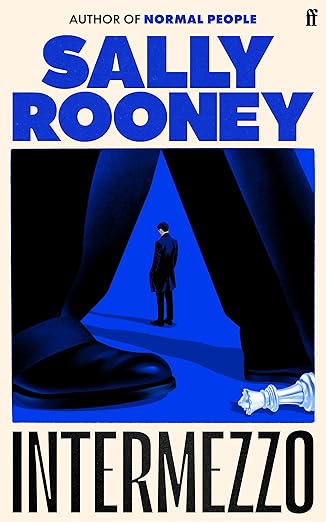
Intermezzo
3.490 kr.Peter is a Dublin lawyer in his thirties – successful, competent and apparently unassailable. But in the wake of their father’s death, he’s medicating himself to sleep and struggling to manage his relationships with two very different women – his enduring first love Sylvia, and Naomi, a college student for whom life is one long joke.
Ivan is a twenty-two-year-old competitive chess player. He has always seen himself as socially awkward, a loner, the antithesis of his glib elder brother. Now, in the early weeks of his bereavement, Ivan meets Margaret, an older woman emerging from her own turbulent past, and their lives become rapidly and intensely intertwined.
For two grieving brothers and the people they love, this is a new interlude – a period of desire, despair and possibility – a chance to find out how much one life might hold inside itself without breaking.
-

Kudos
3.490 kr.A woman on a plane listens to the stranger in the seat next to hers telling her the story of his life: his work, his marriage, and the harrowing night he has just spent burying the family dog. That woman is Faye, who is on her way to Europe to promote the book she has just published. Once she reaches her destination, the conversations she has with the people she meets – about art, about family, about politics, about love, about sorrow and joy, about justice and injustice – include the most far-reaching questions human beings ask. These conversations, the last of them on the phone with her son, rise dramatically and majestically to a beautiful conclusion.
Following the novels Outline and Transit, Kudos completes Rachel Cusk’s trilogy with overwhelming power.
-
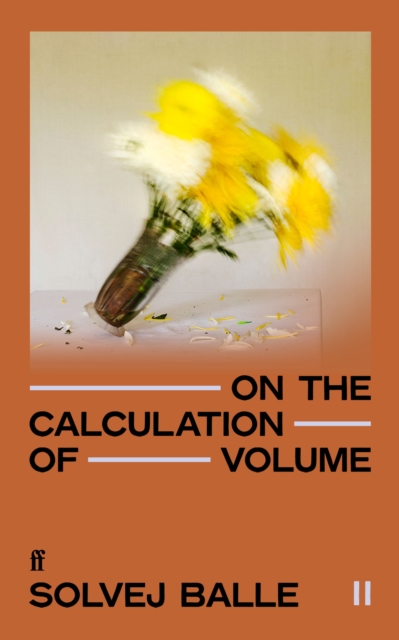
On the Calculation of Volume II
3.990 kr.Tara Selter is searching for a way back into time. Tara has been stuck in the 18th of November for over a year’s worth of days. She still wakes up to the same newspapers, and the same blank faces when she explains that she has seen this all before.
Until one morning, she boards a train and finds herself in a new day. It is still the eighteenth of November, but the faces are different, the weather is colder. She realises that she has found a way out of her endless autumn.
By moving across Europe rather than through time, she can collect the ingredients for the seasons: the thin film of ice on puddles, the fresh spring breeze, the blazing summer sun. As she travels, she begins to hope for a new future, one that will run in parallel to the eighteenth of November, one that she must build for herself.
-
On the Calculation of Volume I
3.990 kr.Tara Selter has slipped out of time. Every morning, she wakes up to the 18th of November. She no longer expects to wake up to the 19th of November, and she no longer remembers the 17th of November as if it were yesterday.
She comes to know the shape of the day like the back of her hand – the grey morning light in her Paris hotel; the moment a blackbird breaks into song; her husband’s surprise at seeing her return home unannounced. But for everyone around her, this day is lived for the first and only time. They do not remember the other 18ths of November, and they do not believe her when she tries to explain.
As Tara approaches her 365th 18th of November, she can’t shake the feeling that somewhere underneath the surface of this day, there’s a way to escape.
-
Malone Dies
3.190 kr.Malone, a decrepit old man, lies naked in his bed, scrawling bitter observations in an exercise book. He is fed on a bed-table, his chamber pot is emptied, he hooks items with his stick, he looks out of the window. He tells the story of a man, looked after by nurses, taken for an ill-fated picnic on an island in the sea. As his mind disintegrates, so does the novel . . .
Malone Dies is the second of the three great novels Samuel Beckett produced during his ‘frenzy of writing’ in the late 1940s. The others are Molloy and The Unnamable.
-
Foster
3.490 kr.It is a hot summer in rural Ireland. A girl is sent to live with foster parents on a farm, not knowing when she will return home. In the strangers’ house, she finds a warmth and affection she has not known before and slowly begins to blossom in their care. But in a house where there are meant to be no secrets, she discovers how fragile her idyll is.
-
The Orange and Other Poems
3.690 kr.I love you. I’m glad I exist.
The Orange provides the perfect introduction to Wendy Cope, one of Britain’s wittiest, best-selling and best-loved poets.
In poems that can turn from laugh-out-loud funny to deeply moving, Wendy Cope offers reflections on love and life. From the joy of falling – and being – in love to ways to help you deal with a painful break-up or the memories of people loved and lost, this is a book you will want to savor and share with all your friends.
-
Shy
3.490 kr.This is the story of a few strange hours in the life of a teenage boy.
He is wandering into the night listening to the voices in his head: his teachers, his parents, the people he has hurt and the people who are trying to love him.
He is feeling a little sorry for himself.
Shy is a novel about imagination, guilt and boyhood. It is about being lost in the dark, and realising you are not alone.
-
-

Outline
3.490 kr.Outline is a novel in ten conversations. Spare and lucid, it follows a novelist teaching a course in creative writing over an oppressively hot summer in Athens. She leads her student in storytelling exercises. She meets other writers for dinner. She goes swimming in the Ionian Sea with her seatmate from the place. The people she encounters speak volubly about themselves, their fantasies, anxieties, pet theories, regrets, and longings. And through these disclosures, a portrait of the narrator is drawn by contrast, a portrait of a woman learning to face great a great loss.
-
Transit
3.490 kr.In the wake of her family’s collapse, a writer and her two young sons move to London. The upheaval is the catalyst for a number of transitions – personal, moral, artistic, and practical – as she endeavours to construct a new reality for herself and her children. In the city, she is made to confront aspects of living that she has, until now, avoided, and to consider questions of vulnerability and power, death and renewal, in what becomes her struggle to reattach herself to, and believe in, life.
Filtered through the impersonal gaze of its keenly intelligent protagonist, Transit sees Rachel Cusk delve deeper into the themes first raised in her critically acclaimed novel Outline, and offers up a penetrating and moving reflection on childhood and fate, the value of suffering, the moral problems of personal responsibility and the mystery of change.
-
The Forester’s Daughter
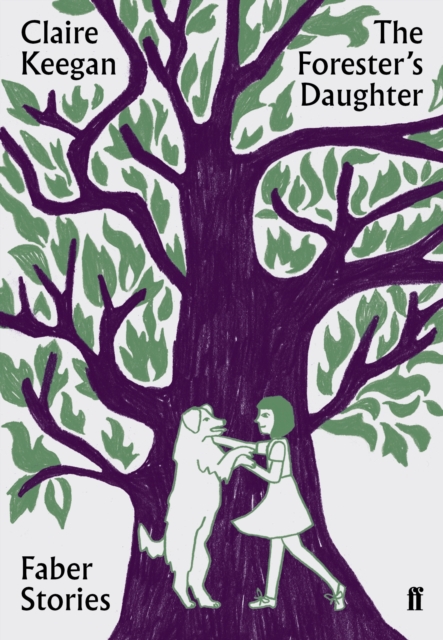
2.590 kr.The evening is fine. In the sky a few early stars are shining of their own accord. She watches the dog licking the bowl clean. This dog will break her daughter’s heart, she’s sure of it.
Claire Keegan’s mesmeric story takes us into the heart of the Wicklow countryside, and of the farming family of Victor Deegan, with his ‘three teenagers, the milking and the mortgage’.When Deegan finds a gun dog and gives it as a present to his only daughter, his wife is filled with foreboding at this seeming act of kindness. As the seasons pass, long-buried family secrets threaten to emerge.
-

Letters from Iceland
4.990 kr.In the summer of 1936, W. H. Auden and Louis MacNeice visited Iceland on commission to write a travel book, but found themselves capturing concerns on a scale that were far more international. ‘Though writing in a “holiday” spirit,’ commented Auden, ‘its authors were all the time conscious of a threatening horizon to their picnic – world-wide unemployment, Hitler growing everyday more powerful and a world-war more inevitable.’ The result is the remarkable Letters from Iceland, a collaboration in poetry and prose, reportage and correspondence, published in 1937 with the Spanish Civil War newly in progress, beneath the shadow of looming world war.
-

Small Things Like These
3.490 kr.It is 1985, in an Irish town. During the weeks leading up to Christmas, Bill Furlong, a coal and timber merchant, faces into his busiest season. As he does the rounds, he feels the past rising up to meet him – and encounters the complicit silences of a people controlled by the Church.